

For an international registered nurse, working in the United States can be a major career opportunity. But getting a U.S. nursing job and obtaining permanent residency are two different parts of the process.
One pathway that international nurses often hear about is the EB-3 employment based immigrant visa, which can lead to permanent residence in the United States.
So what does EB-3 actually mean for a nurse?
Here is a simple breakdown of the process.
What is EB-3?
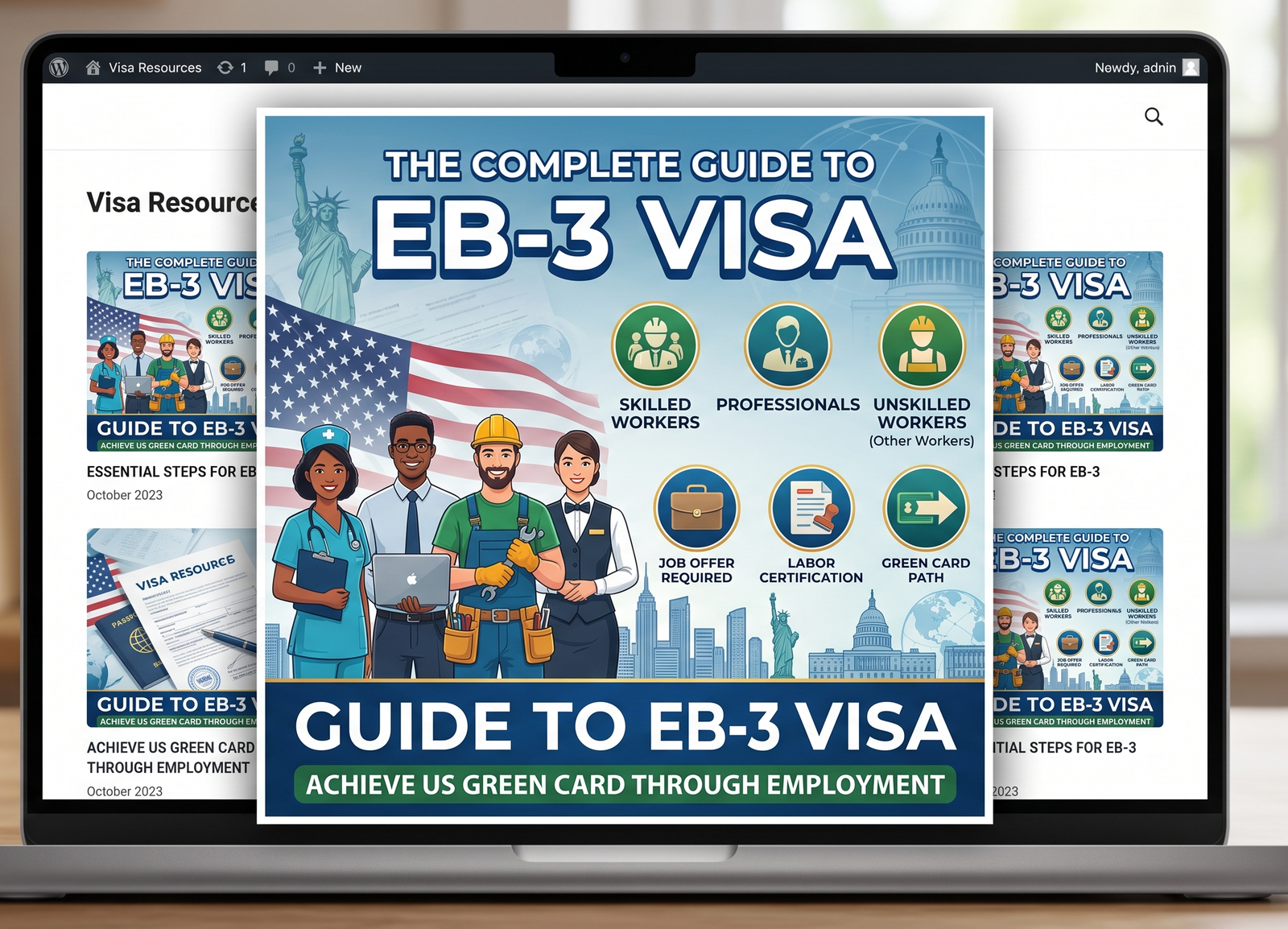
EB-3 is an employment based immigration category for certain skilled workers, professionals, and other workers.
For nurses, the category is particularly relevant because professional nurses can qualify for Schedule A, Group I, a designation that provides a specific labor certification process for certain occupations.
USCIS: Employment Based Immigration, Third Preference EB-3
The employer plays an important role
EB-3 is generally an employer sponsored pathway. This means that an eligible U.S. employer offers a qualifying permanent position and is involved in the immigration petition.
The nurse is not simply applying for a green card independently. The employment opportunity and the employer’s petition are important parts of the process.
The employer generally files Form I-140, Immigrant Petition for Alien Workers, with U.S. Citizenship and Immigration Services.
What about PERM?
This is one area where international nurses should pay close attention.
Many people hear that employment based green cards require PERM labor certification. However, registered nurses are included in Schedule A, Group I.
Schedule A allows qualifying employers to use a different labor certification procedure. Instead of obtaining a certified labor certification through the standard PERM process before filing the immigrant petition, the employer can submit an uncertified labor certification with the I-140 petition for a Schedule A case.
In other words, an RN’s EB-3 process is not exactly the same as the standard PERM process used for many other occupations.
USCIS: Schedule A Designation Petitions
USCIS: Health Care Worker Certification
This distinction is important because the immigration process for nurses has specific requirements that should be evaluated based on the nurse’s individual circumstances and the offered position.
What is the I-140?
The I-140 is the immigrant petition filed with USCIS for the employment based case.
In a typical Schedule A nursing case, the employer submits the I-140 together with the required Schedule A documentation.
USCIS then reviews the petition to determine whether the requirements for the requested employment based classification have been met.
An important point for nurses to understand is that I-140 approval does not automatically mean that the nurse immediately receives a green card.
There is another important factor: visa availability.
USCIS: Form I-140 Filing and Processing Procedures
What is a priority date?
The priority date is essentially the date used to determine an applicant’s place in line for an immigrant visa when visa numbers are subject to numerical limits.
The U.S. Department of State publishes a monthly Visa Bulletin showing which priority dates are eligible to move forward.
This is why two nurses can have approved employment based petitions but still have different timelines depending on their circumstances.
USCIS: Visa Availability and Priority Dates
U.S. Department of State: Visa Bulletin
The Visa Bulletin can also change from month to month. Dates can move forward, remain unchanged, or in some circumstances move backward, a situation known as retrogression.
For example, in the August 2026 Visa Bulletin, the EB-3 Final Action Date for applicants chargeable to countries listed under “All Chargeability Areas Except Those Listed Separately” was September 1, 2024. The dates were different for countries such as China, India, Mexico, and the Philippines.
Because these dates change, nurses should always check the current Visa Bulletin rather than relying on an old article or social media post.
U.S. Department of State: August 2026 Visa Bulletin
What happens after the I-140?
The next stage depends in part on where the nurse is located and whether an immigrant visa is available.
If the nurse is outside the United States
The case generally proceeds through consular processing.
After the petition and other requirements are satisfied, the case can move through the National Visa Center and eventually to a U.S. embassy or consulate for the immigrant visa process.
This can involve submitting documents, completing the required immigrant visa application, undergoing a medical examination, and attending an interview.
U.S. Department of State: Immigrant Visa Process
If the nurse is already in the United States
Depending on the person’s immigration status, eligibility, and visa availability, the nurse may potentially be able to apply for permanent residence from inside the United States through Adjustment of Status, using Form I-485.
This is different from consular processing because the applicant is applying to adjust their status inside the United States rather than completing the immigrant visa process through a U.S. consulate abroad.
The appropriate route depends on the individual’s circumstances, so nurses should obtain professional immigration advice when necessary.
Why can the process take time?
One of the biggest misconceptions about EB-3 is that there is one simple processing time from “job offer” to “green card.”
In reality, several stages can be involved.
Employment opportunity
↓
Schedule A requirements
↓
I-140 petition
↓
I-140 adjudication
↓
Visa availability and priority date
↓
Consular processing or Adjustment of Status
↓
Immigrant visa or permanent residence
Each stage can involve different requirements, government agencies, and processing times.
Visa availability can be particularly important because employment based immigrant visas are subject to annual numerical limits and country specific allocations. The Department of State can therefore establish cut off dates and adjust them as demand changes.
U.S. Department of State: Visa Bulletin
What should an international nurse take away from this?
The most important thing is that EB-3 is not simply a nursing job with a green card attached to it.
It is an employment based immigration process involving a qualifying employer, an eligible nursing position, immigration documentation, USCIS processing, visa availability, and either consular processing or Adjustment of Status depending on the individual’s circumstances.
For nurses considering an EB-3 opportunity, it is important to understand what the employer is actually offering, what stage of the process the nurse is entering, what costs and responsibilities apply, and what immigration pathway is being pursued.
Most importantly, immigration cases are individual. A nurse’s country of birth, current immigration status, nursing credentials, licensure, employment situation, family circumstances, and other factors can affect the process.
EB-3 can be an important pathway for international nurses seeking permanent residence in the United States, but understanding the process before signing an employment agreement can make a significant difference.