

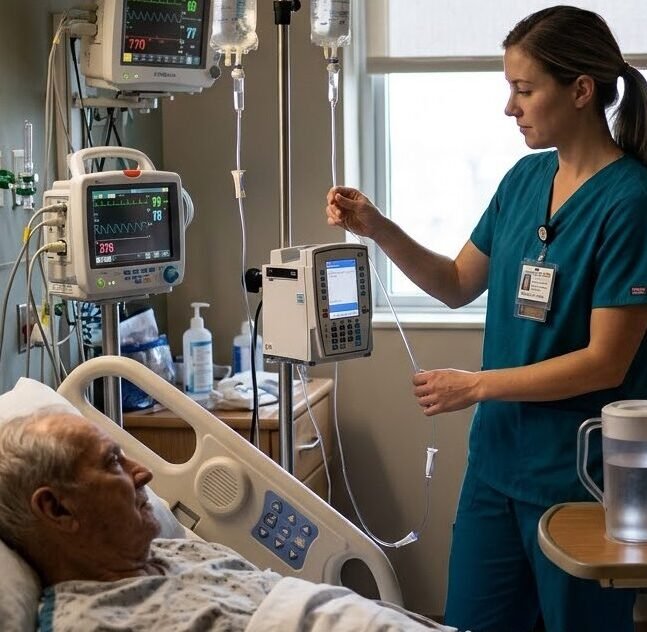
If you are a foreign educated nurse hoping to build a career in the United States, there is something important you should understand about the American healthcare system. The country faces significant challenges retaining nurses in bedside positions, but that does not mean there is an equal shortage of nurses for every role in the profession.
Understanding the difference can help you make better decisions about your career, your first job in the United States and the professional experience you need to build for the future.
Why are American hospitals struggling to retain bedside nurses?
A recent article published by Kanebridge News, titled Nurses Are in High Demand, But They’re Quitting in Droves, highlights a serious problem in American healthcare. Hospitals need nurses, yet many nurses are leaving bedside positions because the demands of the job have become increasingly difficult to sustain.
Several factors contribute to this problem, including chronic understaffing, heavy patient workloads, burnout, workplace violence, long shifts and the emotional pressure of caring for patients in demanding clinical environments. When nurses are responsible for too many patients or lack the support they need, the job becomes harder to manage safely and sustainably.
Compensation and scheduling also matter. Some nurses discover that they can earn competitive salaries in positions outside traditional bedside nursing while enjoying more predictable schedules, fewer physically demanding responsibilities or greater flexibility. Others move into education, administration, management, consulting or advanced practice.
The result is a difficult cycle. Hospitals struggle to retain bedside nurses, the remaining staff may face even heavier workloads, and those working conditions can encourage more nurses to leave.
This is the central issue: the shortage is not simply about how many people hold nursing qualifications. It is also about how many qualified nurses are available and willing to work in the clinical positions hospitals need to fill.
You can read the original article here:
A shortage of bedside nurses is not the same as a shortage of nurses across every specialty
This distinction deserves more attention.
The nursing profession offers many career paths. Nurses can work in hospitals, outpatient clinics, education, research, administration, case management, consulting and other settings. Some positions require extensive bedside experience, while others have different educational and professional requirements.
Consequently, a healthcare system can experience serious staffing difficulties on hospital floors while nurses continue to compete for certain administrative, leadership or nonclinical opportunities.
This does not mean that every leadership or administrative position is easy to fill, or that there is no demand for experienced nurse managers. It means that demand varies by role, specialty, location and qualifications. A shortage of bedside nurses does not automatically translate into an equivalent shortage in every other nursing occupation.
The US Bureau of Labor Statistics projects that employment of registered nurses will grow by 6% between 2025 and 2035, with approximately 180,800 openings annually. Those openings include positions created by employment growth and the need to replace workers who leave their jobs or the workforce.
These figures demonstrate continued demand for registered nurses, but they do not establish that every nursing specialty faces the same shortage.
Source: US Bureau of Labor Statistics, Registered Nurses, Occupational Outlook Handbook.
https://www.bls.gov/ooh/healthcare/registered-nurses.htm
For foreign nurses considering opportunities in the United States, the practical lesson is simple. Being a registered nurse opens professional doors, but the opportunities available to you will depend on your clinical background, experience, qualifications and the specific needs of employers.
Why bedside experience matters so much for foreign nurses
For internationally educated nurses, starting a career in the United States involves more than obtaining a license. Even experienced nurses must adapt to a different healthcare system, workplace culture, clinical documentation requirements and hospital procedures.
Your previous experience is valuable, but you still need to become familiar with how care is delivered in your new environment.
Bedside nursing gives you the opportunity to develop that familiarity through direct patient care. You learn how to recognize changes in a patient’s condition, prioritize competing demands, communicate with physicians, collaborate with other healthcare professionals and respond to clinical situations under pressure.
You also gain experience with the practical realities of hospital work, including shift handovers, electronic health records, medication administration procedures, infection prevention protocols and patient safety standards.
These skills are not acquired simply by holding a nursing degree. They develop through practice, feedback and exposure to real clinical situations.
Research on internationally qualified nurses has also highlighted the importance of orientation, mentorship, supportive managers and appropriate clinical preparation when nurses transition into a new healthcare environment.
Source: Roth et al. (2025), Integrating Internationally Qualified Nurses: A Qualitative Exploration of Nurse Managers’ Influence From Nurses’ Experiences, BMC Nursing.
https://pmc.ncbi.nlm.nih.gov/articles/PMC11869482
This is why your first position matters. A supportive clinical environment can help you build confidence, understand local expectations and establish the professional foundation you need to progress.
Bedside experience can strengthen your future career options
Some nurses enter the profession knowing that they eventually want to become nurse managers, educators or administrators. There is nothing wrong with having those ambitions.
However, it is important to understand that leadership in healthcare involves more than administrative knowledge. Nurse leaders must understand the realities of clinical practice and the consequences their decisions can have for patients and the nurses providing their care.
Consider a nurse manager responsible for staffing a hospital unit. Understanding patient acuity, the demands of a busy shift, the challenges of coordinating care and the impact of inadequate staffing can help that manager make more informed decisions.
A manager who has worked at the bedside may also be better positioned to understand the concerns of frontline staff and recognize when policies or staffing arrangements create practical difficulties.
Research published in the Journal of Nursing Administration examined nurse manager preparation and competence across 54 hospitals. The study identified professional experience as an important factor associated with nurse manager competence.
Source: Warshawsky and Cramer, Describing Nurse Manager Role Preparation and Competency: Findings From a National Study.
https://pubmed.ncbi.nlm.nih.gov/30973429
Bedside experience does not guarantee that someone will become an effective leader, and not every administrative role requires the same clinical background. Nevertheless, direct patient care can provide a valuable foundation for nurses who eventually pursue leadership opportunities.
Your international experience is valuable, but you still need to build on it
Foreign educated nurses bring different clinical experiences, professional perspectives and skills to American healthcare. Many have worked in demanding environments and developed substantial knowledge before arriving in the United States.
The objective is not to dismiss that experience or suggest that nurses must start their professional development from zero.
Instead, it is to recognize that every healthcare system has its own standards, procedures and expectations. Learning to work effectively within the American system takes time, and bedside experience can help make that transition more successful.
A systematic review published in Nursing Open examined foreign educated nurses’ work experiences and patient safety. It highlighted challenges associated with communication, unfamiliar clinical practices and the adjustment to a new working environment.
Source: Viken, Solum and Lyberg (2018), Foreign Educated Nurses’ Work Experiences and Patient Safety: A Systematic Review of Qualitative Studies.
https://pubmed.ncbi.nlm.nih.gov/30338091
For this reason, foreign nurses should look for employers that offer appropriate orientation, clinical guidance and opportunities to develop their skills. The right first position is not necessarily the one with the most impressive title. It is one that allows you to become a confident, competent and effective nurse in your new environment.
Think about where you want your career to be five years from now
If you are considering working in the United States, do not focus exclusively on securing your first job. Think about what that job can help you achieve over the next several years.
Strong bedside experience can help you build clinical competence, understand the American healthcare system, develop professional relationships and prepare for future opportunities. Depending on your interests and qualifications, you may later decide to pursue advanced education, become a nurse educator, move into management or explore another specialty.
The important thing is to develop a solid foundation before making your next move.
The United States needs nurses who can provide direct patient care, and hospitals face real challenges keeping those positions staffed. That is a different problem from saying that every nursing role is equally difficult to fill.
For foreign nurses, understanding this distinction can make a significant difference when planning a career.
Do not underestimate the value of bedside nursing. The experience you gain today can become one of the most valuable assets you carry into the next stage of your professional life.